Last updated: November 16, 2026
Three-season room plants that thrive are the ones that can handle bright light, cooler nights, and swings in humidity without sulking. Ferns, geraniums, snake plants, pothos, and citrus trees are the safest bets for many rooms, but the right pick depends on how much sun the space gets and how cold it gets after sunset.
Key takeaways
- Match the plant to the room first, not the other way around.
- Morning sun and bright shade fit different plants than hot afternoon sun.
- Cool nights are the main filter; some houseplants hate the drop.
- Pot size and drainage matter as much as the plant name.
- Seasonal rotation helps you keep weaker plants alive through the rough months.
Which three-season room plants usually thrive?
The best three-season room plants are the ones that tolerate light changes and brief temperature dips better than most indoor-only plants. Ferns, geraniums, snake plants, pothos, and citrus trees all fit that job in different ways, but none of them wants the same exact conditions.
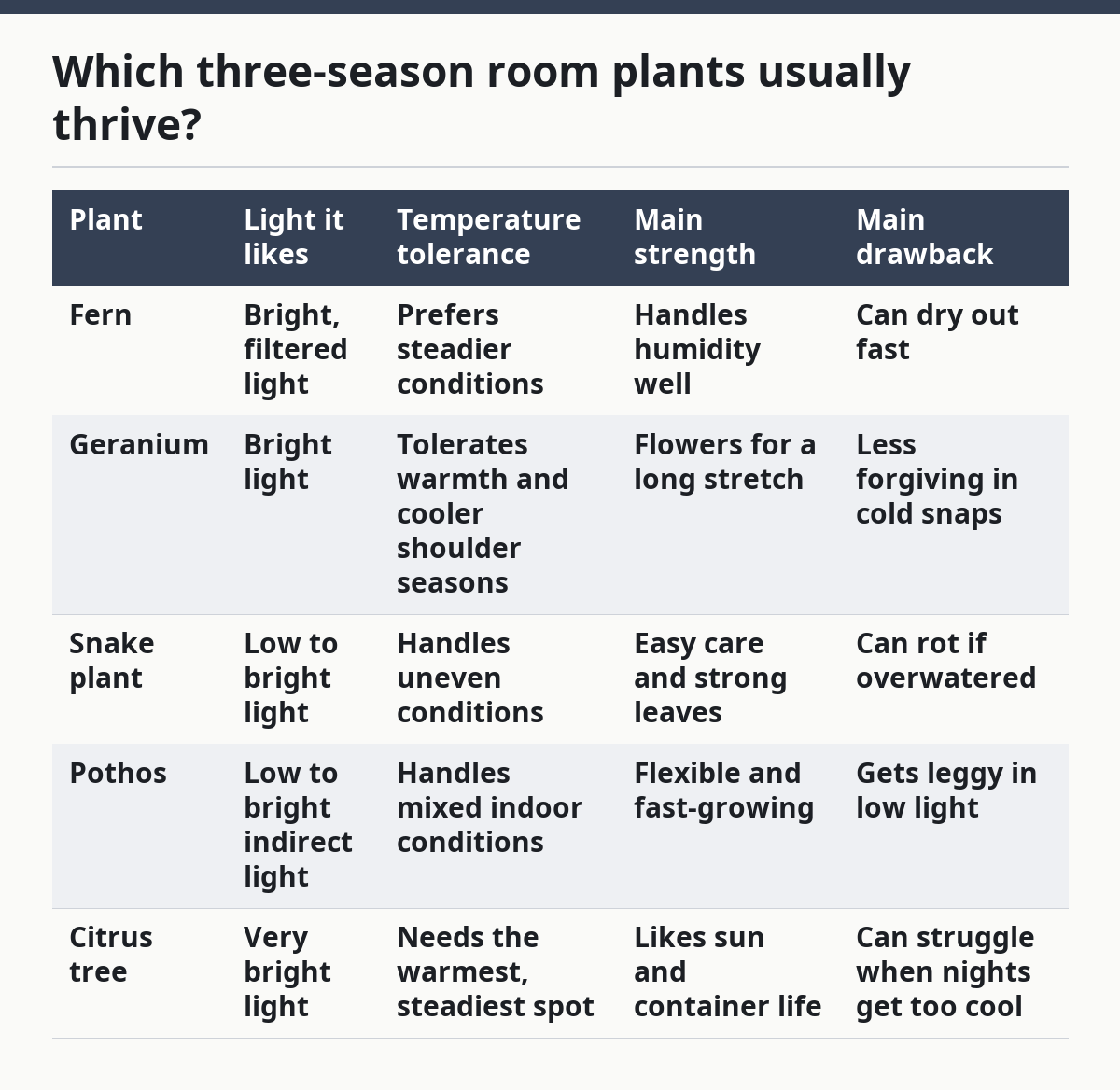
Here is the quick comparison:
| Plant | Light it likes | Temperature tolerance | Main strength | Main drawback |
|---|---|---|---|---|
| Fern | Bright, filtered light | Prefers steadier conditions | Handles humidity well | Can dry out fast |
| Geranium | Bright light | Tolerates warmth and cooler shoulder seasons | Flowers for a long stretch | Less forgiving in cold snaps |
| Snake plant | Low to bright light | Handles uneven conditions | Easy care and strong leaves | Can rot if overwatered |
| Pothos | Low to bright indirect light | Handles mixed indoor conditions | Flexible and fast-growing | Gets leggy in low light |
| Citrus tree | Very bright light | Needs the warmest, steadiest spot | Likes sun and container life | Can struggle when nights get too cool |
The room matters as much as the plant. A glassy space with hot noon sun can suit citrus, while a bright but cooler room often suits fern and pothos better. A snake plant is the least demanding, but it is not the most interesting choice if you want flowers or fruit.
The common mistake is buying for looks alone. A citrus tree may look right in a sunroom photo, but if your room drops chilly at night, it may stall or shed leaves. The same goes for ferns in a dry, blazing room; they often lose fronds before the season is over.
If you want a broad starting point, this page belongs to the bigger guide on designing and using a three-season room. The plant list here is the part that changes the room from a nice shell into a lived-in space.
What light do these plants need?
These plants need different kinds of light, but most thrive best in bright, indirect light with some direct sun only when the room stays warm enough. That is the rule that saves the most mistakes.
A simple way to sort the space is by window exposure. South- and west-facing spots often deliver stronger light, which helps geraniums and citrus. East-facing spots are gentler and often better for ferns and pothos. Snake plants sit in the middle and tolerate more placement choices than the others.
Use the room itself as the filter. If the glass makes the space feel hot by midday, choose tougher leaves and thicker stems. If the room stays bright but not hot, softer plants can work. A fern can do well near a bright window if it never dries out for long. A citrus tree usually wants the brightest position you can give it.
One useful standard is to think in terms of direct versus indirect sun instead of trying to chase exact hours. Direct sun means the rays hit the leaves without a barrier. Indirect light means the plant gets brightness without the leaf scorch that can come from glass-boosted afternoon heat.
The mistake here is putting every plant in the same line along the window. That makes one plant too hot, another too dim, and a third too dry. Move the thirstiest and sun-loving plants closest to the light, then step back the shade-tolerant ones.
How do temperature swings change the list?
Temperature swings narrow the list more than light does, because many three-season room plants are fine with brightness but not with cold evenings. A plant that looks great in July may fail in October if the room drops too low overnight.
Snake plants and pothos are the most forgiving of the group. Geraniums can also handle a fair amount of seasonal change, especially when they are not kept soggy. Ferns want steadier conditions and are more sensitive to dry, cool air. Citrus trees usually need the warmest, most stable spot in the room.
The useful question is not just “How warm is it now?” It is “What happens after sunset, and what happens on cloudy days?” A room that feels pleasant at noon can still become too chilly for tropical-leaning plants once the sun moves away. If the room feels drafty, put the more delicate plants away from the glass edge.
The trade-off is simple. The tougher the plant, the less drama you get, but also the less showy it may be. Snake plant is the easiest. Citrus is the most rewarding when it works, but it is also the least forgiving. Fern sits in the middle, with beauty that comes at the cost of more attention.
Which containers work best?
The best containers are the ones with drainage holes, enough width for the root ball, and a size that matches how quickly the plant dries out. A pretty pot without drainage is a bad bet for almost every plant on this list.
For geraniums and pothos, a medium pot with drainage is usually enough, since both can adapt to container life. Ferns do better in pots that hold moisture without staying waterlogged. Snake plants prefer a pot that does not trap extra water, because their roots dislike sitting wet. Citrus trees often need a larger, stable container because the plant can get top-heavy and needs room for roots.
Material matters, but less than drainage. Terracotta dries faster than glazed ceramic, which can help in a bright room. Plastic holds moisture longer, which can help a fern but hurt a snake plant if the watering habits stay the same.
A common mistake is repotting into a much larger container “for future growth.” That can leave too much wet soil around the roots. A plant in a too-large pot often grows slower because the root zone stays damp longer than it should. Keep the step up modest unless the root ball is clearly crowded.
How do you set up the room for these plants?
The best setup is a bright spot map, a drainage plan, and a simple watering rhythm that changes with the season. That gives the plants a better chance than random placement does.
Follow these steps:
-
Map the room by light for 1 day. Put one plant or object near each window zone, then note which spots get direct sun, bright shade, or glare by midday. The result is a clear placement plan instead of guesswork.
-
Group plants by water need. Place fern together with other moisture-loving plants, and keep snake plant and citrus in separate zones. That makes it easier to avoid overwatering one plant while helping another.
-
Choose pots with drainage holes. Use saucers or trays under each container, especially on wood or carpet. The plant gets excess water out of the root zone, and the floor stays safer.
-
Place sun lovers closest to the glass. Put citrus and many geraniums where they get the strongest light, then move pothos and fern a little farther back. The result is less leaf scorch and fewer stressed plants.
-
Rotate containers every 2 to 4 weeks. Turn the pot a quarter turn so growth stays even. A plant that leans hard toward the window will look thin on one side if you never move it.
-
Adjust position when the season changes. In cooler months, move the more sensitive plants farther from drafty glass or chilly corners. That small shift often matters more than changing fertilizer or decor.
The biggest mistake is treating the room like a living room shelf. A three-season room changes fast, so a plant that was happy in May may need a new spot in September. A little rotation keeps growth fuller and reduces leaf drop.
Which plants are wrong for this room?
The wrong plants are the ones that need steady warmth, high humidity, or very low light all year. A three-season room is not the place for those demands unless the room stays unusually stable.
Plants that dislike cold nights are the riskiest choice. Thin-leaved tropicals often look fine at first, then lose strength after a few temperature swings. Very dry rooms are also a poor match for fern if there is no practical way to raise humidity nearby. On the other end, a plant that needs deep shade may struggle because three-season rooms usually run brighter than normal interior spaces.
This is where honesty helps more than optimism. A plant can be “indoor-friendly” and still be wrong for a three-season room. If the room gets hot in the day and cool at night, choose tough plants first and experiment later. Start with snake plant or pothos if you want an easier win, then add fern, geranium, or citrus once you know how the room behaves.
That advice may sound cautious, but it saves money and dead foliage. A plant that fails in the wrong room was not the wrong species; it was the wrong match.
How do you rotate plants through the seasons?
Seasonal rotation means moving plants to better spots as light and temperature change through spring, summer, and fall. It is the easiest way to keep a mixed plant group alive in a room that never stays exactly the same.
Begin with the most fragile plants when the weather turns. Ferns often need the first move if the room becomes dry or drafty. Citrus trees may need the sunniest position during weaker-light months. Geraniums can usually stay put longer if they keep enough light and warmth. Snake plants and pothos are the last to need a change.
A simple calendar rhythm works better than reacting only when leaves yellow. Check the room at the start of each new month in the growing season. If one corner feels colder, drier, or darker than the others, shift the plant before stress shows up. That is easier than trying to revive a plant after it has already dropped leaves.
Rotation also helps keep growth balanced. A plant that leans toward the window can stay crooked if you never turn it. A quarter-turn every 2 to 4 weeks is enough for most containers.
If you want one rule to keep in mind, use this: bright, warm corners for citrus and geranium, steadier middle zones for pothos and fern, and the less demanding spots for snake plant. That order changes less often than people expect, and it is the reason some rooms stay attractive from one season to the next while others turn into a pile of stressed leaves.
What plants do well in a three-season room?
The best plants for a three-season room are fern, geranium, snake plant, pothos, and citrus tree, because they can handle the light and temperature shifts better than many standard houseplants. Fern and pothos suit softer light, geranium likes brightness, snake plant is the easiest to keep alive, and citrus rewards the brightest warm spot.
Can you keep tropical plants in a three-season room?
Yes, but only if the room stays warm enough and does not swing too hard at night. Tropical plants often handle bright light well, yet cold drafts and dry air can damage them fast. Snake plant and pothos are the least fussy; citrus can work if the room stays bright and stable.
How much light do plants need in a three-season room?
Most plants in a three-season room do best in bright light, with some needing direct sun and others preferring filtered light. Citrus and many geraniums want the brightest location, while fern and pothos usually prefer gentler light. The room’s window direction and midday heat matter more than a clock-based number.
Drafted with AI; not yet reviewed by a person.










One thought on “Three-season room plants that thrive”