Last updated: November 16, 2026
The best three-season room flooring choice is usually one that handles damp air, cleans fast, and bridges the line between indoors and outdoors without buckling or staining. For many rooms, that means vinyl plank flooring, tile, sealed concrete, or composite decking, with an area rug only as a top layer. The right pick depends less on looks than on moisture resistance, subfloor prep, and how much cold, dirt, and splash the room will take.
Key takeaways
- Choose a floor that can handle humidity, wet shoes, and quick temperature swings.
- Vinyl plank, tile, sealed concrete, and composite decking each solve a different problem.
- A flat, dry subfloor matters as much as the finish layer.
- Slip resistance is worth thinking about if the room opens to a yard, pool, or patio.
- An area rug can soften a hard floor, but it should not be the main defense against moisture.
What makes a three-season room different?
A three-season room needs flooring that can live with changing moisture and temperature, not just foot traffic. Unlike a standard interior room, it sits closer to the outdoor side of the house, so splashes from rain, tracked-in dirt, and damp air matter more than in a living room.
That shift changes the ranking. Hardwood often looks right, but it is a poor fit if the room sees regular humidity swings or wet shoes. Carpet has the same problem in a different way: it holds moisture, traps grit, and takes longer to dry. A floor that can be wiped, swept, or mopped usually fits the space better.
The other thing people miss is the transition point. A three-season room often connects to a patio, deck, or backyard, so the floor has to work at a doorway, not just in the middle of the room. A material with a smooth surface and decent slip resistance is easier to live with than one that looks good but turns slick after a summer storm.
If the room stays dry, the options widen. If it gets damp often, the list gets shorter fast. That is why the right answer is usually not “the prettiest floor,” but “the floor that can take the conditions without warping, staining, or turning into a cleaning chore.”
Which flooring options work best?
Vinyl plank flooring, tile, sealed concrete, and composite decking are the main choices worth comparing for a three-season room. Each one handles moisture differently, and each one asks for a different level of prep.
| Flooring option | Moisture tolerance | Cleaning | Feel underfoot | Best fit | Main drawback |
|---|---|---|---|---|---|
| Vinyl plank flooring | Good if the product is made for damp areas | Easy sweep-and-mop care | Softer than tile | Rooms that need a warm look and low upkeep | Can dent or lift if the subfloor is poor |
| Tile | Very good | Very easy | Hard and cool | Rooms that may get wet and need a durable finish | Hard on bare feet and unforgiving if the base moves |
| Sealed concrete | Very good | Very easy | Hard and firm | Rooms with a simple, modern look | Needs a good seal and can feel cold |
| Composite decking | Good outdoors and near-outdoor use | Easy | Firm, outdoor feel | Rooms that blend with a deck or patio | Less like indoor flooring |
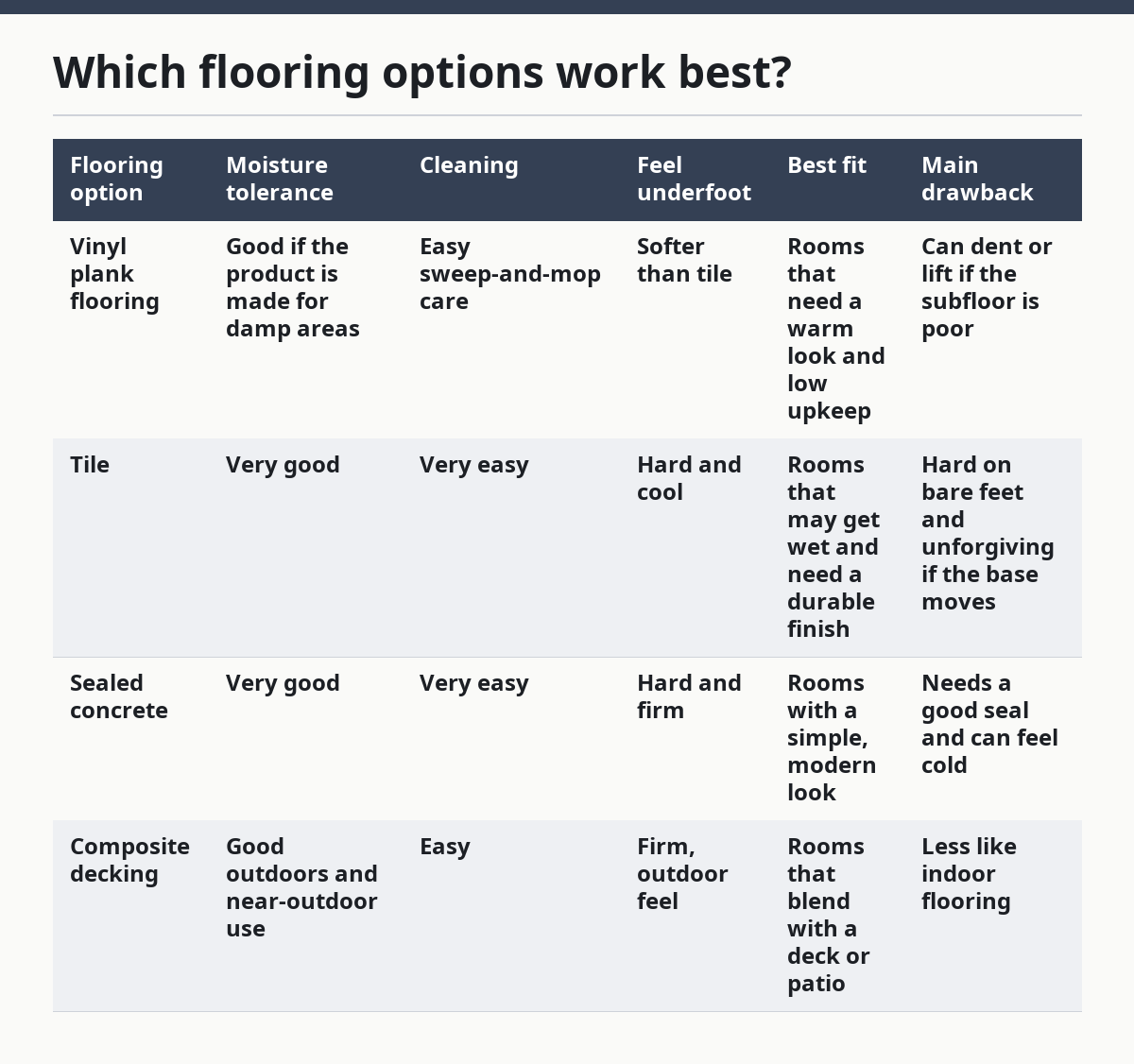
Vinyl plank flooring is the most flexible choice for many three-season rooms. It gives a finished indoor look, comes in a wide range of styles, and usually cleans with a broom and damp mop. It is not the right answer for a floor that moves a lot or holds water under the planks.
Tile is the strongest choice when moisture is the main worry. Porcelain and similar tile surfaces are simple to clean and tolerate wet shoes well. The trade-off is comfort: the surface is hard, and any movement in the base can crack grout or tile.
Sealed concrete works when the room has a slab and the owner wants the simplest surface. It can be a solid choice for an easy-clean room, but only if the concrete is properly sealed and the slab is in good shape. A rough or uneven slab will show through fast.
Composite decking is the most outdoor-facing option. It makes sense when the room feels closer to a porch or deck than a finished interior. The drawback is that it leans outdoor in look and feel, so it may not suit someone who wants the room to read as an extension of the house.
How should you choose between them?
The best way to choose is to match the flooring to moisture level, cleaning habits, and the way the room connects to the rest of the house. Start with the hardest question: how often will the floor get wet or dirty?
-
Check the dampest day the room gets. If rain blows in, shoes stay wet, or morning condensation is common, rank moisture resistance above style. That usually pushes tile, sealed concrete, or composite decking ahead of wood-based surfaces.
-
Look at the subfloor. A flat, stable base matters more than a fancy top layer. Vinyl plank and tile both need a sound surface beneath them, and tile is less forgiving of movement.
-
Decide how you want the room to feel. If the room should feel like part of the house, vinyl plank usually fits better than composite decking. If the room should feel like a porch you can wipe down, composite or tile makes more sense.
-
Think about cleaning in plain terms. If the floor will need frequent sweeping and the occasional mop, pick a surface that does not hold grit. Tile, vinyl plank, and sealed concrete all work better than carpet.
-
Check slip resistance near the door. A room that opens to a yard, pool, or patio needs a surface that does not become slick with a little water. Texture helps, but deep grooves can also trap dirt.
-
Add an area rug only after the floor is right. A rug can soften a hard floor and reduce echo, but it should not be the main layer protecting a weak choice underneath.
The wrong choice is usually the one made for looks alone. A beautiful floor that swells, stains, or grows hard to clean will annoy you every week.
What does subfloor prep need?
Subfloor prep for a three-season room means making the base flat, dry, and strong enough for the finish layer. If that part is wrong, even a good material can fail early.
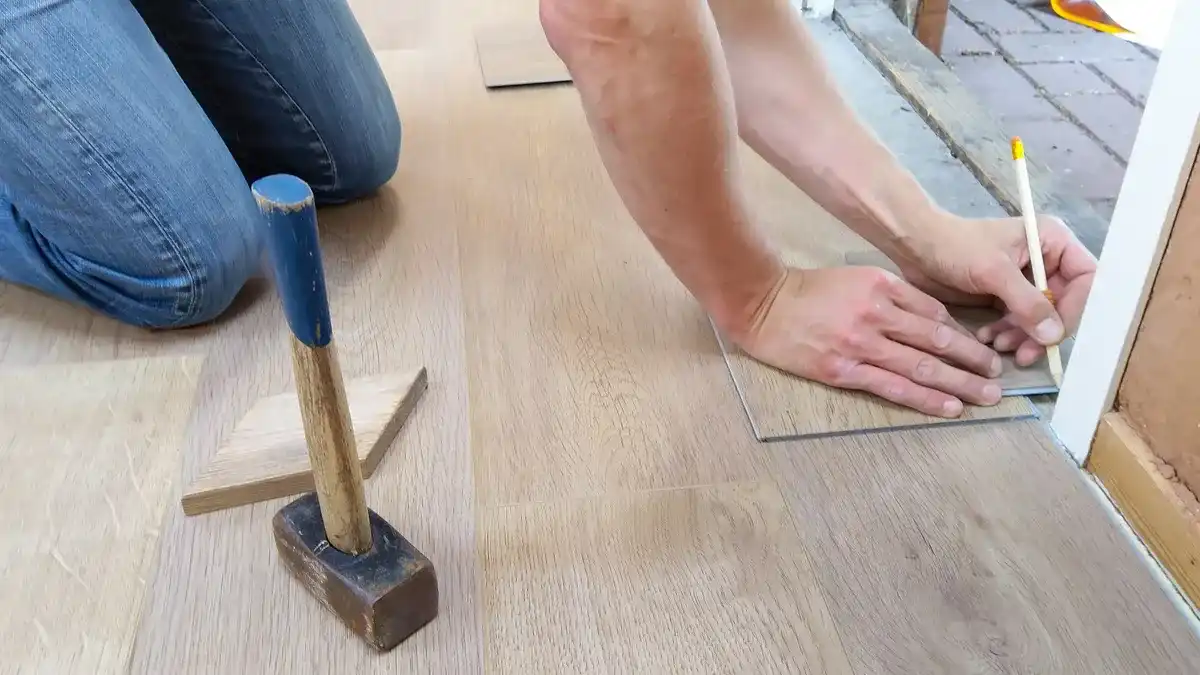
For vinyl plank flooring, the base should be smooth and free of high spots that could telegraph through the planks. For tile, the base needs even more care because tile does not forgive bounce or movement. Sealed concrete can skip a second layer in some rooms, but only if the slab is sound and properly prepared.
A practical prep sequence looks like this:
- Clean the base first. Remove dust, grit, old adhesive, and loose debris so the finish layer sits on a clean surface.
- Check for soft spots or movement. Any flex in the floor can become a crack, a lifted plank, or a hollow tile sound later.
- Fix uneven areas before the finish goes down. A flat surface helps planks lock together and helps tile stay bonded.
- Control moisture before installation. A damp base can trap water under the floor and cause warping, odor, or bond failure.
- Use the right underlayment or setting method. The product should match the floor type, not just the room size.
- Leave the right edge space if the material needs it. Floating floors need room for movement; tight edges can cause buckling.
This is the part many generic guides skip. They talk about the surface color and forget the layer under it. In a three-season room, the base can make or break the project.
Is slip resistance worth paying attention to?
Yes, slip resistance is worth paying attention to because a three-season room often sits between wet outdoors and dry indoors. The risk is highest at doorways, around mats, and anywhere rainwater or pool water can land.
Tile can be a strong choice if the surface has enough texture to avoid turning slick. Smooth glazed surfaces are easier to clean but can feel slippery when wet. Composite decking often has a more outdoor-style texture, which helps near patios and entries, though it can still collect dirt in the grooves.
Vinyl plank flooring is popular because it is easy to live with, but it is not all the same. A smoother plank may clean well and still feel less secure than a textured one when the floor gets damp. Sealed concrete can also vary a lot, depending on the finish. A glossy seal looks neat but may not be the best pick if the room gets wet shoes often.
An area rug can help only in a narrow zone. Put it where the room is dry, not where water comes in. A rug at the wrong threshold can bunch up, soak through, or slide if it lacks a grippy back.
The simple rule is this: if you expect wet feet, choose a floor that can take water without becoming a hazard. That matters more than most style choices.
What should you avoid?
Avoid flooring that looks better in a living room than in a room with outdoor exposure. Hardwood is the clearest example. It can look beautiful, but it is a poor fit for a three-season room that sees damp air, tracked-in grit, or seasonal swings.
Avoid carpet as the main floor covering if the room gets regular moisture. It takes in dirt, holds smells longer than hard surfaces, and dries slowly after spills. An area rug can still work over the right hard floor, but not as a substitute for a moisture-safe base.
Avoid picking a floor before checking the subfloor. A polished surface over a weak or uneven base often becomes a repair project. That is especially true with tile, where movement can lead to cracking, and with floating floors, where unevenness can cause noise or gaps.
Avoid glossy finishes in the wettest spots. They can look polished on day one, then become annoying the first time rain gets tracked in. A slightly textured, easy-clean surface is usually the better trade.
The wrong floor for a three-season room is the one that needs babysitting. If the material needs constant drying, special care, or frequent repair, it does not fit the room.
How do the main materials compare in plain English?
Vinyl plank flooring is the easy indoor-looking choice, tile is the toughest hard surface, sealed concrete is the simplest slab option, and composite decking is the most outdoor-feeling choice. The best pick depends on how much moisture the room sees and how finished you want it to feel.
| If you want… | Better choice | Why |
|---|---|---|
| A warmer indoor look | Vinyl plank flooring | It looks finished without acting delicate |
| The easiest wipe-down surface | Tile or sealed concrete | Both clean quickly and handle spills well |
| A floor that feels close to a deck | Composite decking | It fits an outdoor-to-indoor transition |
| A softer feel underfoot | Vinyl plank flooring | It is less hard than tile or concrete |
| The strongest moisture tolerance | Tile or sealed concrete | They handle damp conditions better than most alternatives |
This is where the trade-offs become clear. Vinyl plank flooring is often the most balanced choice, but not the most durable in every case. Tile lasts well and handles water, but it is hard and less forgiving. Sealed concrete is practical, but it can feel basic if you want a warmer room. Composite decking makes sense near a patio, yet it does not read like a finished interior floor.
For a lot of three-season rooms, the safest answer is a hard, moisture-tolerant surface with an area rug layered on top where the room stays dry. That gives you cleaning ease without making the whole room feel bare.
What is the best flooring for a three-season room?
The best flooring for a three-season room is usually vinyl plank flooring, tile, sealed concrete, or composite decking, depending on how damp the room gets and how finished you want it to feel. Vinyl plank is the most versatile indoor-looking option, while tile and sealed concrete are better when moisture is the main issue. Composite decking fits rooms that lean more porch than living room.
If the room is exposed to wet shoes, summer rain, or frequent damp air, moisture tolerance should outrank softness and style. If the room stays fairly dry, more options open up, but the floor should still clean easily and hold up to the transition from outside to inside.
Can you put hardwood in a three-season room?
Hardwood is usually not the best choice for a three-season room. It can react badly to moisture swings, wet shoes, and seasonal changes that are common in this type of space.
If the room stays very dry and behaves more like a finished interior room, hardwood may be possible in some settings, but it is still riskier than vinyl plank flooring, tile, or sealed concrete. A three-season room is usually a better match for a floor that can handle damp conditions without warping.
Do three-season rooms need special subfloors?
Three-season rooms need a subfloor that is flat, dry, and stable, which often matters more than a special product name. Vinyl plank flooring can tolerate some variation, but tile needs a much firmer base, and sealed concrete needs a sound slab.
The key is to treat the subfloor as part of the flooring choice, not as an afterthought. If the base is uneven, damp, or weak, even a moisture-tolerant finish can fail early.
Drafted with AI; not yet reviewed by a person.